My Cutie Unicorn: A Playful Font for Branding Projects
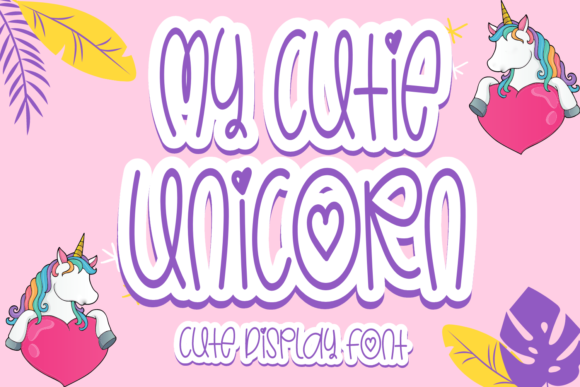
I was recently tasked with creating a brand identity for a small, family-owned café that wanted to feel whimsical and inviting. The first step in any branding project is choosing the right typeface, and that’s where My Cutie Unicorn came into play. It's a quirky, fun, and jolly display font that immediately caught my eye with its playful curves and soft edges. I could see how it would fit perfectly with the café’s vision of being a cozy, child-friendly space.
The moment I loaded My Cutie Unicorn into my design software, I knew this was going to be a game-changer. Its personality is unmistakable—like a gentle unicorn strolling through a meadow, bringing joy wherever it goes. The letterforms are rounded and full of charm, making it ideal for anything that needs a touch of sweetness without losing clarity.
From Mockup to Final Brand Materials
I started by testing the font on a logo draft. I placed it over a watercolor background and immediately felt the contrast between the softness of the illustration and the boldness of the font. It worked like magic. The letters had enough weight to stand out but weren’t too overpowering. I experimented with different weights and found that the regular style was perfect for headlines while the lighter version worked well as an accent.
Next, I moved on to packaging mockups. The café sells custom-made cookies, and I needed a label that would catch attention on the shelves. I used My Cutie Unicorn for the product name and paired it with a clean sans serif font for the ingredients list. The combination was balanced and professional, yet still retained that playful vibe that the brand needed.
I also tested it on social media graphics. An Instagram post featuring a new cookie flavor used the font for the headline “Strawberry Dream Cookies” and it looked absolutely adorable. The font’s jolly nature made the message feel more personal and engaging. It wasn’t just text—it was part of the story.
Where Does My Cutie Unicorn Shine?
My Cutie Unicorn is a display font at heart, which means it’s best suited for headlines, logos, and short-form text rather than long paragraphs. That said, I found it surprisingly versatile. When used sparingly, it can add character to a brand without overwhelming the design.
In logo design, it brings warmth and approachability. For brand identity, it works well with playful or youthful concepts. In packaging design, it adds a touch of whimsy that makes products stand out. On social media graphics, it helps create a cohesive visual tone across posts. And when used in website headers or hero sections, it sets the mood instantly.
One thing I noticed early on was how well it pairs with other fonts. I tested it with a modern sans serif for body text and found the contrast to be visually appealing. It also looks great next to a script font for accents or signature lines. However, I recommend keeping the pairing simple to avoid clutter.
Design Observations and Practical Advice
I made sure to test My Cutie Unicorn on various surfaces and materials. On a shop sign, it read clearly from a distance, which is essential for visibility. On business cards, it added a charming detail that made the card feel more personal. On a label sticker, it was legible and didn’t look cramped. Even on a homepage hero section, it maintained its readability and visual appeal.
For client work, I always advise testing the font before committing to a full brand system. It’s important to see how it behaves in different sizes, colors, and backgrounds. Also, check if the font includes alternates, ligatures, or special characters that might be useful for your project. In the case of My Cutie Unicorn, I found the character set to be comprehensive enough for most branding needs.
Another thing to consider is commercial font licensing. If you're using My Cutie Unicorn for client projects, ensure that the license allows for such use. This will save you time and potential headaches down the line.
Final Touches and Recommendations
As I wrapped up the café’s branding project, I made sure to use My Cutie Unicorn consistently across all materials. From the logo to the packaging, social media, and even the website, it helped maintain a cohesive and recognizable brand voice.
If you’re working on a project that needs a touch of playfulness, My Cutie Unicorn is definitely worth considering. Whether it’s for a children’s brand, a creative studio, or a boutique, this font brings a unique charm that can elevate your design work.
Remember, though, that no single font is a one-size-fits-all solution. Always test it in context and pair it wisely. With the right approach, My Cutie Unicorn can become a valuable asset in your design toolkit.